Special discounts on dental care now! Scroll down!

Wisdom Tooth Extraction: When Is It Necessary and How to Prepare?
Wisdom tooth growing crooked or causing pain? Learn when wisdom tooth extraction is necessary and how to prepare, from Bali Dentica, Denpasar dental clinic.
Bali Dentica
7/15/20263 min read
Wisdom teeth are a topic that makes a lot of people nervous. At Bali Dentica, we hear the same questions all the time: "My wisdom tooth is growing in, does it need to come out?" or "I heard wisdom tooth extraction really hurts — is that true?"
In this article, we'll cover everything you need to know — when extraction is genuinely necessary, when it's fine to leave a wisdom tooth alone, and what to prepare before the procedure so the whole process feels less stressful.
What Is a Wisdom Tooth?
Wisdom teeth are the third set of molars, typically the last teeth to emerge, usually between ages 17–25. Most people have four wisdom teeth — two on the upper jaw, two on the lower. The problem is, many modern jaws simply don't have enough room to accommodate them, which often leads to complications as they try to grow in.
When Does a Wisdom Tooth Need to Be Extracted?
Not every wisdom tooth needs to come out. Here are the common indications that extraction is recommended:
1. Growing Crooked or Impacted
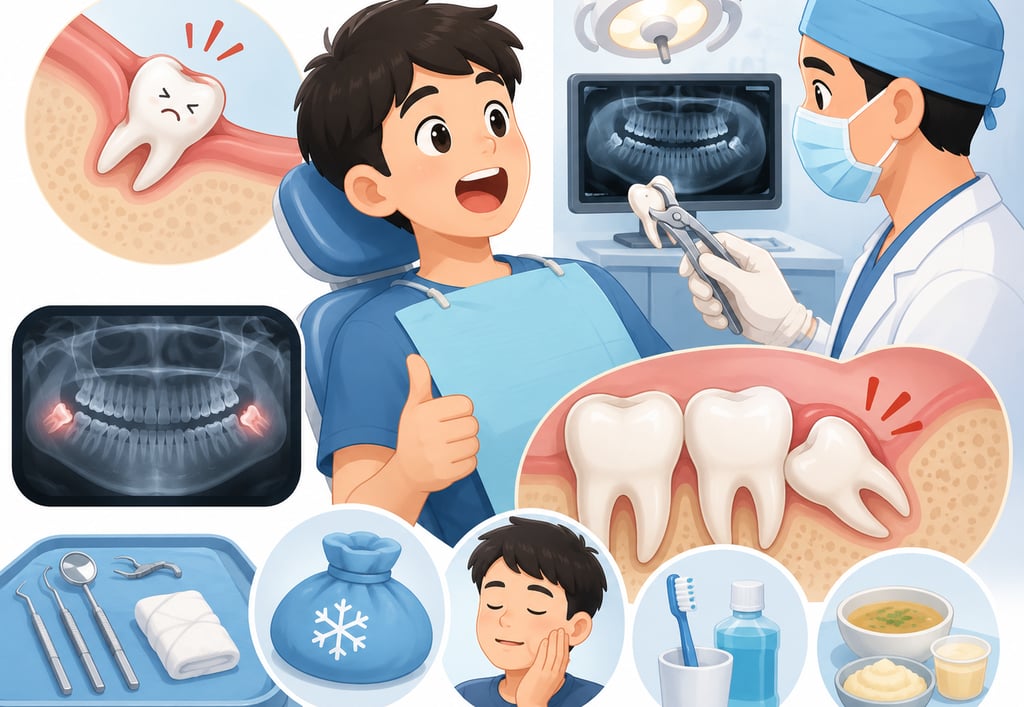
This is the most common reason. When there isn't enough space in the jaw, wisdom teeth can grow at an angle, push against neighboring teeth, or become fully trapped under the gum or bone (full impaction).
2. Recurring Pain or Swelling
A partially erupted wisdom tooth often creates a pocket where food debris and bacteria get trapped, leading to gum infection around the tooth (pericoronitis) — causing pain, swelling, and sometimes difficulty opening the mouth.
3. Damaging the Neighboring Tooth
Pressure from a crooked wisdom tooth can damage the structure of, or cause decay in, the second molar next to it.
4. Causing Dental Crowding
In some cases, wisdom teeth can push other teeth out of alignment, especially in patients who previously had orthodontic treatment (braces).
5. Cysts or Other Abnormalities
Though rare, an impacted wisdom tooth can trigger the formation of a cyst in the surrounding area, which — if left untreated — can damage the surrounding jawbone.
When Can a Wisdom Tooth Be Left Alone?
Not every wisdom tooth is problematic. If your wisdom tooth:
Grows in straight and aligned with the other teeth
Is in a position that allows for proper cleaning during brushing
Isn't causing pain, infection, or damage to neighboring teeth
Doesn't interfere with your bite (occlusion)
...then it can typically be kept, as long as it continues to be monitored regularly by a dentist.
How to Prepare for Wisdom Tooth Extraction
To help the procedure go smoothly and support a faster recovery, here's what you should prepare:
Before the Procedure
Get a consultation and X-ray (panoramic scan) — to accurately assess the position of the wisdom tooth roots before treatment
Share your medical history — including any drug allergies, existing medical conditions, or medications you're currently taking
Eat a proper meal beforehand (unless instructed otherwise by your dentist), so you don't feel weak after the procedure
Clear your schedule — try to avoid important commitments on the day of extraction and the day after
Arrange for a companion if the procedure involves sedation or you think you'll need help getting home
After the Procedure (Aftercare)
Bite down on the sterile gauze as instructed to help control bleeding
Apply a cold compress to the outer cheek to reduce swelling during the first 24 hours
Avoid rinsing vigorously on the first day, so the protective blood clot isn't dislodged
Eat soft foods such as porridge, soup, or yogurt for the first few days
Avoid hot, spicy foods, and carbonated drinks for a while
Don't smoke during recovery, as it can slow down healing
Take medication as prescribed by your dentist, without adjusting the dose yourself
Does Wisdom Tooth Extraction Hurt?
This is the question we get asked the most. The extraction itself is performed under local anesthesia, so you won't feel pain during the procedure — just pressure sensations. Discomfort typically appears after the anesthesia wears off, and is generally manageable with prescribed pain relief. The level of post-extraction discomfort varies from person to person, depending on the complexity of the tooth's position.
When Should You See a Dentist Right Away?
Don't wait until the pain becomes unbearable. It's best to get checked early if you experience:
Recurring pain in the back molar area
Swollen or red gums around the wisdom tooth
Difficulty fully opening your mouth
Sudden bad breath coming from the back of your mouth
Early detection and treatment make the extraction procedure simpler compared to waiting until the condition becomes severe.
Traveling to Bali and Need a Wisdom Tooth Checked?
If you're visiting Bali and dealing with wisdom tooth discomfort, you don't have to wait until you're back home. At Bali Dentica, we'll do a thorough examination — including evaluating the wisdom tooth's position — before determining whether extraction is genuinely necessary. We believe every procedure should be based on clear clinical need, not just routine practice.
📍 Bali Dentica — Jl. Sedap Malam No. 88A, Kesiman, East Denpasar, Bali
🕐 Open every day, 09:00 AM–09:00 PM WITA
⭐ 4.9-star Google rating from 70+ patient reviews 🗣️ English-speaking, licensed dentist
👉 [WhatsApp Us Now] to discuss your wisdom tooth concerns and book a consultation.