Special discounts on dental care now! Scroll down!
Tooth Sensitivity in Bali: Causes, Treatments, and When to See a Dentist
Sharp tooth pain in Bali? Learn the real causes of tooth sensitivity, what you can do, and when to see an English-speaking dentist in Denpasar. Bali Dentica — open every day.
Bali Dentica
6/24/20267 min read
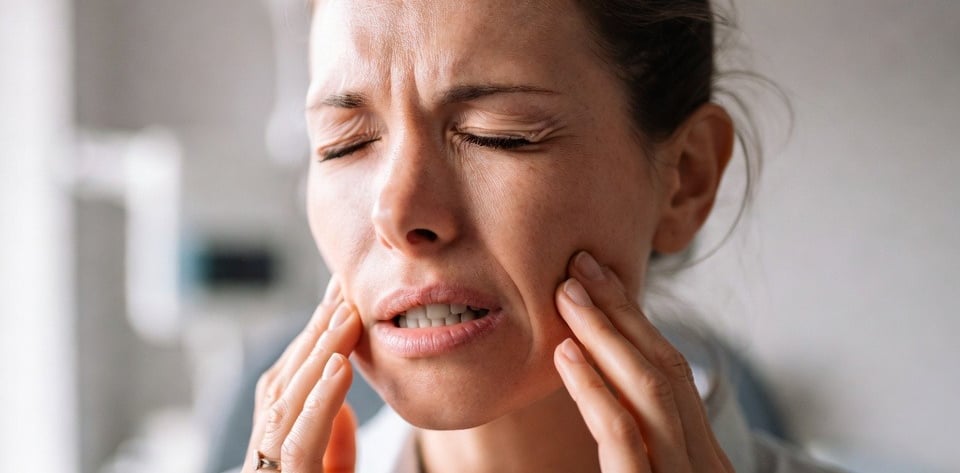
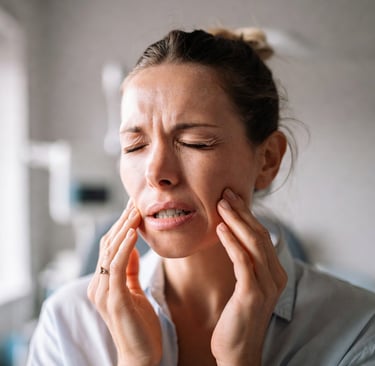
You're relaxing on the beach with a cold drink or enjoying a warm Balinese coffee — and suddenly a sharp, fleeting twinge shoots through one of your teeth. Sound familiar? That's tooth sensitivity, and it affects roughly 1 in 3 adults worldwide.
For tourists and expats in Bali, tooth sensitivity presents an extra challenge: you're away from your regular dentist, you may not know where to go, and the last thing you want is a dental problem cutting your trip short. The good news is that most cases of tooth sensitivity are very treatable — and getting it looked at here in Bali is easier, faster, and far more affordable than you might expect.
In this article, the team at Bali Dentica explains everything you need to know: what causes tooth sensitivity, what you can do about it, and exactly when you should see a dentist — even while you're on holiday.
💡 Quick reassurance: Bali Dentica is open every day of the year, 10 AM to 8 PM. Our dentists speak fluent English and are experienced in treating international patients. Walk-ins are welcome — no referral needed.
What Is Tooth Sensitivity?
Tooth sensitivity — clinically known as dentin hypersensitivity — is a sharp, short-lived pain triggered by specific stimuli: cold, heat, sweet foods, acidic drinks, or even a blast of cold air. It typically lasts a few seconds to half a minute, then fades once the trigger is removed.
It happens when the inner layer of your tooth, called dentin, becomes exposed. Dentin is normally protected by two outer layers: enamel (covering the crown of the tooth) and cementum (covering the root). When either of these layers wears away or recedes, dentin's microscopic channels — called dentinal tubules — create a direct pathway to the tooth's nerve. Any stimulus reaching those tubules gets transmitted straight to the nerve, causing that characteristic sharp zing.
How does tooth sensitivity feel?
• A sudden, sharp pain that lasts a few seconds — not a constant throb
• Triggered by specific things: cold drinks, hot food, sweets, acidic foods, or touch
• Affects one tooth or several teeth at once
• Disappears as soon as the trigger is removed
⚠️ Important distinction: A short, sharp zing = likely sensitivity. A throbbing, continuous ache that doesn't go away, especially with swelling or fever = possible infection or abscess. The latter needs urgent dental attention — don't wait.
What Causes Tooth Sensitivity? The 8 Most Common Reasons
Sensitivity isn't a single condition — it's a symptom that can have many different root causes. Identifying the right cause is the only way to get the right treatment. Here's what's most likely happening:
1. Enamel Erosion
Tooth enamel is the hardest substance in your body, but it can't regenerate once lost. Acid is its biggest enemy. Common culprits in Bali include:
• Tropical fruit juices, sodas, energy drinks, and vinegar-heavy local dishes
• Acid reflux (GERD) — stomach acid washing over teeth, often without obvious symptoms
• Frequent vomiting (bulimia) — a less visible but significant cause
• Certain medications that increase mouth acidity
2. Gum Recession
When gums pull back, the root surface of the tooth — which has no enamel protection — becomes exposed. Root surfaces are significantly more sensitive than the crown. Causes include:
• Brushing too hard or using a hard-bristled toothbrush (a very common mistake)
• Gum disease (periodontal disease) that has been left untreated
• Genetics — some people naturally have thinner gum tissue
• Long-term tobacco use
3. Teeth Grinding (Bruxism)
Many people grind their teeth at night without realising it. Over time, this wears down enamel evenly across multiple teeth. Signs you might grind: jaw pain in the morning, headaches, teeth that look shorter than they used to, or a partner complaining about the noise. A custom night guard from your dentist can protect your enamel.
4. Incorrect Brushing Technique
Brushing too vigorously — especially with a back-and-forth scrubbing motion — gradually strips away enamel. The damage accumulates over years, which is why many people first notice sensitivity in their 30s or 40s despite having 'always brushed their teeth.'
5. Cracked Tooth or Leaking Filling
A tiny crack in a tooth can create a direct pathway from the outer surface to the nerve — invisible to the eye but very much felt. Old or worn fillings can develop small gaps over time, allowing temperature and stimuli to reach the dentin beneath.
6. Tooth Decay (Cavities)
A cavity that has progressed into the dentin layer will almost always cause sensitivity. Unlike the other causes on this list, sensitivity from decay will not improve with desensitising toothpaste — the cavity needs to be filled.
7. Post-Treatment Sensitivity
It's completely normal to experience temporary sensitivity after a dental cleaning (scaling), whitening treatment, or new filling. This usually settles within 1–4 weeks as the dentinal tubules calm down. If it hasn't resolved after a month, mention it to your dentist.
8. Whitening Toothpaste Overuse
Some whitening toothpastes contain abrasive particles that, used daily over a long period, gradually wear away enamel. If you use whitening toothpaste every day and you've developed sensitivity, switching to a regular fluoride toothpaste may help.
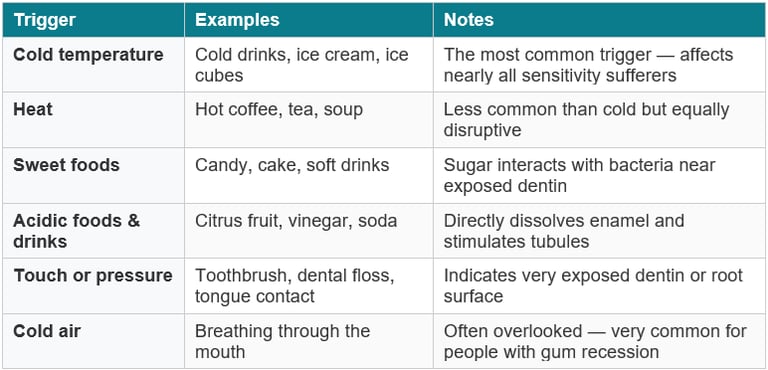
Common Sensitivity Triggers — And Why They Affect You
How a Dentist Diagnoses the Cause of Your Sensitivity
When you visit Bali Dentica with tooth sensitivity, we don't just hand you a tube of desensitising toothpaste. Proper diagnosis is essential — because the right treatment depends entirely on the cause. Here's what to expect:
1. A brief consultation — we'll ask when it started, what triggers it, how long it lasts, and whether you've had recent dental work
2. Visual examination — checking enamel condition, gum levels, fillings, and signs of wear or cracking
3. Sensitivity testing — using a gentle cold stimulus or dental probe to identify which teeth are affected and how severely
4. X-rays if needed — to check for hidden decay, root problems, or bone loss beneath the gum line
Bite and wear assessment — to identify signs of grinding or incorrect brushing patterns
💡 Why this matters for tourists:
Even if you only have a few days left in Bali, a diagnosis gives you clarity. If the cause is a cavity, you can get it filled the same day. If it's gum recession or enamel erosion, you'll leave with a clear treatment plan to follow up with your regular dentist at home — and we can provide full clinical notes to share with them.
What You Can Do Right Now (Before Seeing a Dentist)
• Use a desensitising toothpaste containing potassium nitrate or stannous fluoride — apply it, don't rinse, for better effect
• Switch to a soft-bristled toothbrush immediately if you don't already use one
• Avoid known triggers temporarily — very cold or hot drinks, acidic foods and juices
• Don't brush immediately after consuming acidic food or drink — wait at least 30 minutes
Rinse with a fluoride mouthwash to help strengthen enamel
⚠️ A word of caution:
Desensitising toothpaste works well for mild sensitivity with no structural damage. But if your sensitivity doesn't improve within 2–4 weeks, or if it's getting worse, toothpaste alone isn't enough. You need a dentist to find out why.
When Should You See a Dentist — Even on Holiday?
We know visiting a dentist while on holiday isn't exactly what you planned. But there are situations where waiting until you get home isn't the right call:
🚨 See a dentist promptly if:
• The pain is severe, constant, or throbbing — this is no longer just sensitivity
• There is swelling in your gum, jaw, or face near the sensitive tooth
• You have a fever alongside tooth pain — possible sign of dental abscess
• Sensitivity developed suddenly and intensely with no obvious trigger
• The tooth has changed colour (darker or greying) — may indicate nerve damage
• You can see a visible crack, chip, or broken filling
• You've been using desensitising toothpaste for over a month with no improvement
• Sensitivity is affecting your ability to eat, drink, or sleep
✅ It's probably fine to monitor at home if:
• Mild, brief sensitivity that appeared 1–2 weeks after a cleaning or whitening — this is normal and temporary
• Occasional twinges when drinking very cold water that resolve in under 5 seconds — try desensitising toothpaste for 4 weeks first
Frequently Asked Questions
Q: I only have 3 days left in Bali — is it worth seeing a dentist?
A: Absolutely, especially if you have any of the warning signs listed above. Even in a short visit, a dentist can diagnose the cause, provide immediate relief (fluoride treatment, desensitiser, or a filling), and give you a written clinical summary to take home. Leaving sensitivity untreated can mean a much bigger problem — and bill — when you get home.
Q: Do I need travel insurance to visit a dentist in Bali?
A: You don't need insurance to visit — you can pay directly. However, many travel insurance policies do cover emergency dental treatment, so it's worth checking your policy. We can provide official receipts and clinical documentation to support any insurance claim.
Q: I don't speak Indonesian — will I be understood?
A: Yes, completely. Our dentists and reception team at Bali Dentica are fluent in English. We regularly treat patients from Australia, the UK, Europe, the US, and across Asia. You won't need to worry about communication.
Q: Can sensitivity toothpaste fix the problem completely?
A: For mild, structurally intact cases — yes, it can significantly reduce sensitivity over time. But it only masks the symptom without addressing the underlying cause. If sensitivity is caused by a cavity, crack, or significant gum recession, toothpaste alone won't be enough.
Q: My sensitivity got worse after a teeth cleaning last week — is that normal?
A: Post-scaling sensitivity is very common and usually resolves within 1–3 weeks. The cleaning removes tartar that may have been partially shielding exposed root surfaces. A fluoride desensitiser applied by your dentist can speed up recovery. If it's been longer than 4 weeks with no improvement, come in for a follow-up.
Q: Is it safe to get dental treatment in Bali?
A: Yes — at licensed private clinics. Look for clinics where dentists display their STR (registration certificate) and SIP (practice licence). At Bali Dentica, all our dentists are fully licensed and our clinic meets Indonesian Ministry of Health standards. We use single-use instruments where applicable and follow strict sterilisation protocols.
🦷 Tooth Sensitivity Bothering You While in Bali?
Don't let it ruin your holiday. Our English-speaking dentists at Bali Dentica are here to help — open every day, no appointment needed.
📍 Jl. Sedap Malam, Kesiman, East Denpasar, Bali | ⏰ Open Every Day: 10 AM – 8 PM
🌐 English-Speaking Dentist | ⭐ 4.9 Google Rating | Walk-ins Welcome